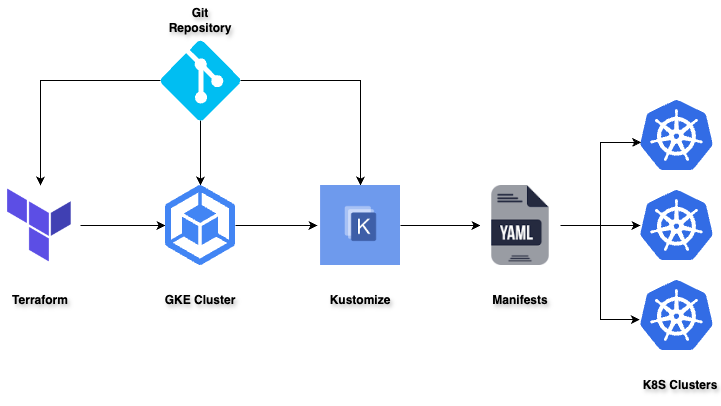
Managing GKE (k8s) clusters and applications inside them has become a never ending battle. Managing apps and configuration accurately has become cumbersome. This has become more common given the rise of micro-services and event-driven services.
Java service Development involving test, SAST (Sonar), Containerisation, Versioning can become complicated. Creating multiple steps with Environment variables, CI specific plugins and DockerFile is time wasted. With maven plug-ins you can automate it saving lot of effort.
In today's interconnected businessess, private and internal networks play a vital role in optimizing organizational performance. These dedicated networks offer significant advantages in three critical areas: speed, cost-effectiveness, and security.
Setting up a simple disaster recovery (DR) mechanism for Jenkins running in Google Kubernetes Engine (GKE) using Google Cloud Storage (GCS) buckets and FUSE persistent volumes.
Workload Identity represents a modern, security-focused approach to managing authentication between services and workloads. This powerful feature eliminates the need for managing static credentials, enhancing your cloud security posture.
With cloud providing unlimited resources, we may end up with a huge bill if not careful. A good approach is to start very small and expand slowly based on metrics rather than upfront provisioning. You can use tools like terraform, GKEs, grafana for this purpose.